An Unexpected Foe

I’m lucky that when I was diagnosed with multiple myeloma, my employer provided exceptional health insurance coverage. I’ve had only small out-of-pocket costs associated with very expensive life-saving treatments. Unfortunately, in recent days coverage for continued treatments was threatened and that has caused new stress and worries.


Recently I spent a lot of time fighting a new enemy in my myeloma battle: a treatment denial by my insurance company. 

This hasn’t been an issue for me up to this point. The treatments I had received were obviously very expensive, but they were all covered and, thanks to my employer’s generosity, I have very low premiums and a very low out-of-pocket cap.  

I am very aware of the stress that my family and I could experience if I didn’t have such good insurance. Fortunately, we’ve been able to avoid any significant anxiety on that front, but that all changed recently.

Following my stem cell transplant, my doctor prescribed an aggressive three-drug maintenance regimen of Kyprolis (carfilzomib), Pomalyst (pomalidomide), and dexamethasone (KPD). We agreed that I would be on the regimen for up to three years. 

For the first three months of KPD, the treatment was approved by my insurance, and the claims were paid, but then my employer changed plan administrators.  For almost a year, the claims for my continued maintenance treatments remained pending. I was receiving treatment, but the claims were not being paid. Late in 2017, the treatments were deemed “not medically necessary,” and the claims were denied.

The denial was made by a reviewing agent relying on the National Comprehensive Cancer Network (NCCN) guidelines.  As I understood it, the decision was for two reasons. 

First, the NCCN guidelines do not support the use of combination therapy (two or more myeloma treatments) for maintenance. While combination therapy is widely accepted as initial treatment for multiple myeloma, it is not a conventional approach for maintenance therapy.  

Second, the NCCN guidelines do not list Kyprolis as an approved maintenance therapy.

This denial was shocking and frightening. The KPD regimen had pushed my myeloma disease markers to unmeasurable levels for many months. I was feeling great and looking forward to a bright future. I couldn’t understand how this decision was made after a year of treatment, and I couldn’t imagine what my future held.

The appeal process began immediately. My appeal included a letter from my doctor outlining my current treatment and the success I had achieved with it. I also wrote a letter outlining my confusion about the decision and my understanding of my treatment needs.

My doctor noted that I was a high-risk patient and that in his opinion conventional treatments are insufficient and aggressive maintenance gives me the greatest hope of survival. The letter went on to explain that my current treatment is based substantially on a study published several years ago that showed that Revlimid (lenalidomide), Velcade (bortezomib), and dexamethasone (RVD) maintenance therapy yielded impressive survival outcomes in high-risk myeloma patients. (For more information on the study, see this related Beacon news article). 

My appeal was denied.

It is a bit tougher to understand the basis of this denial, but there was a statement that there were no peer-reviewed articles supporting the use of Kyprolis in a combination regimen for maintenance therapy. My doctor hypothesized that the insurer’s reviewing doctor, while acknowledging studies supporting the use of RVD maintenance, did not consider the equivalency of maintenance with KPD.

I requested a second appeal.

My doctor revised his letter, this time emphasizing the need for combination maintenance, the fact that I didn’t respond to initial treatment with RVD, and the equivalency, or even superiority, of KPD over RVD.  We also included graphs showing the history of my treatment and my significant response to the KPD regimen.

By this point, I had missed a full cycle of treatment, and some of my lab results hinted that the disease was taking advantage of this open door. I wrote another letter, pointing out my new lab results, and citing a review article in which several myeloma specialists describe how they treat high-risk multiple myeloma patient. In that article, the authors share their opinion that “in no other patient population in myeloma is the achievement and then maintenance of CR [complete response] more important.”  

  Perhaps it was my doctor’s revised explanation of my treatment, or concern that denial of treatment might trigger a relapse, but the second appeal was granted and the claims for KPD were approved.

When I first learned my maintenance treatments were suspended, I was overwhelmed. I was getting better. I felt healthy. I was beating the statistics. My doctor had given me the bad news about my high-risk cytogenetics, but then gave me hope by prescribing a treatment regimen that seemed to have a good chance of overcoming the risk. Having that treatment denied felt like my hope of survival had been stolen. I didn’t realize how much stress I felt while the appeals were pending until I was told the treatments would resume. A giant weight was lifted from my shoulders.  It almost seems funny that my wife and I celebrated the news that I could resume cancer treatment.

Persistence and a vigorous defense of my appeals by my doctors and myself returned my hope, at least for now.  Knowing about my disease and my treatment allowed me to take an active role in the appeal process. While it took two tries, my doctors and I were finally able to present the information in a manner that convinced the insurance administrator that my treatments were not only “medically necessary,” but may well be saving my life. With lessons learned that I hope never to use again, I’m moving forward, letting my doctors battle the disease, and focusing my attention on living.

────────────── ♦ ────────────────

 Photo Credit: (c) 2014 Mark Pouley

It is tulip time again in the Skagit Valley. I got up very early one year to arrive at the tulip fields before sunrise. I was rewarded with many great photos, but this is one of my all-time favorites. It is a great reminder of the beauty of the dawn of every day, whether we see it or not.


Putting “Risk” in Perspective

I am considered a “high risk” multiple myeloma patient because of a del17 chromosomal abnormality. What exactly does that mean, and how does it impact my future survival with this disease?


“Did your other doctor talk to you about your cytogenetics?” My current doctor, a myeloma specialist, asked me this while giving me a second opinion on my diagnosis.

It was the first time I’d ever heard the term cytogenetics. My doctor ex­plained that I had a “del17” chromosomal abnormality, which made my dis­ease “high risk” and potentially more aggressive than that of the majority of other multiple myeloma patients. Two years later, I under­stand this concept better, but occa­sionally my gut reverts back to that day and I become frightened that being high risk will prevent me from enjoying a longer, healthier remission.

Patients typically undergo a bone marrow biopsy as part of their initial diagnosis. Many labs will, in addition to standard diagnostic tests, perform fluorescence in situ hybridization (FISH) testing looking for any chro­mo­somal abnormalities in the cancer cells. One such abnormality, del(17p), occurs when one of the “p” arms of chromosome 17 is missing. Patients with this abnormality, and others, are con­sidered high-risk patients. While only a small number of patients are con­sidered high risk, when you are one those patients it doesn’t matter how prevalent it is.

Being labeled high risk sounds scary, and in my research I often read that a finding of a del(17p) abnormality is associated with “poor prognosis.” Without understanding what this language really means, it was easy to believe my multiple myeloma was going to win the battle and my time remaining is shorter than most patients. That simply isn’t true.

High-risk multiple myeloma does not mean treatment failures are a certainty, nor is it a guarantee of shorter life. Being a high-risk patient may require extra diligence in evaluating treatment options, and may mean receiving more medication or even con­sidering more experimentation to find a treatment that will keep the multiple myeloma at bay. It doesn’t, however, guarantee a negative outcome.

In terms I can understand, high risk means that I stand a better than average chance of relapsing sooner than most, and a better than average chance that my multiple myeloma will become resistant to treatment quicker than most. Like all statistics surrounding multiple myeloma, these are just statistics regarding how patients in this subcategory generally fair in relationship to patients without these abnormalities.

I found an interview with Dr. Ola Landgren in a 2012 Myeloma Beacon article particularly helpful to put the concept of “high risk” multiple myeloma in context. Dr. Landgren suggests that if all multiple myeloma patients received limited treatment, everyone would be con­sidered high risk. Their initial responses would be low, remissions would be short, and when relapse occurred, there would be no treatments left to battle the disease. On the other hand, if there were a cure for all forms of multiple myeloma, every patient would be low risk. Today, there are many effective treatments for the vast majority of myeloma patients, but not all patients respond the same. As he explains, “‘Risk’ is an interaction between biology and intervention. And intervention is a variable that changes between clinicians and institutions, and it is constantly changing over time.” So, high-risk myeloma is not inherently bad, it is just a type of myeloma for which research has yet to find a con­sis­tently effective treatment.

Multiple myeloma research and treatment is running at a break neck speed. I received three cycles of Revlimid (lenalidomide), Velcade (bortezomib), and dexamethasone (Decadron) before I stopped responding. I immediately started Kyprolis (carfilzomib), Pomalyst (pomalidomide), and dex and saw a fast and deep response. Recent research indicates that both Kyprolis, and Pomalyst have benefits for del(17p) patients in comparison to Velcade and Revlimid. There is research of other treatments targeting high-risk patients. If future treatments prove effective for patients with abnormal chromosomes, we too might be considered standard risk in the near future.

Because I’m del(17p), my medical team and I decided to treat my multiple myeloma aggressively. We knew from the start that I would have an autologous stem cell transplant. While there is a reasonable debate whether a transplant is a necessary front-line treatment for standard-risk patients who respond well to initial treatments, it was not a debate for me. It is also my understanding that most myeloma specialists recommend up-front stem cell transplant for high-risk patients.

I will also follow an aggressive maintenance path. I’m receiving a lower dose of the same medications that I received in my effective induction treatment. I will likely stay on this program at least three years barring relapse or serious side effects. This plan means we will be more vigilant for symptoms of toxicity. I suspect I will always receive some type of maintenance.

Being high risk does not, however, change the way the disease acts in my body or how side effects of the treatments affect my body. I’ve been lucky on both accounts. We attacked the multiple myeloma before it did any serious damage anywhere, and I’m no more at risk of further bone damage or kidney failure, for instance, than any other multiple myeloma patient. So far treatment has been unremarkable, with good responses and mild side effects.

I’m approaching two years post diagnosis, over six months post transplant, and my doctors are happy with my progress and I’m feeling healthy. Nobody can predict how long my remission will last or what the future holds. “High-risk” or “standard-risk” predictions are just based on statistics, and those statistics don’t take into account my personal information, and they don’t predict how new treatments will behave in the future. Haven’t we all been told, “you are a statistic of one?”

Admittedly, the gremlin hiding in the back of my head occa­sionally reminds me that I’m a high-risk patient, and that some of the reports and statistics offering great hope to the majority of multiple myeloma patients may not apply to me. The gremlin tries to put a damper on my hope and get me to forget how good I feel and how lucky I am to still be able to spend quality time doing the things I like and being with the people I love.

When that happens, I lock the gremlin away and remind myself what it really means to be high risk.

In the end, I’m like all multiple myeloma patients. I trust my doctors and the rapid pace of the progress fighting this disease to keep me with my family for many, many more years.

────────────── ♦ ────────────────

Photo Credit: (c) 2013 Mark Pouley

My photo “Shells on the Shore” tells a more complete story when you know the context and understand the perspective of the photo. These empty clam shells are on the shore of the Tulalip Bay of Washington’s Puget Sound. They were likely placed there following a family feast, a tradition of the native Tulalip people for millennia, as their sustenance and culture revolves around the natural bounty of the water. The photo was taken by placing the camera low and into the shells themselves, altering the normal perspective of a person standing on the shore.

Capturing the Moment

We are all told that we should “live for today” and this is doubly true for cancer patients or those facing life-threatening disease. This is easier said than done in most cases, but some recent events have helped me understand the philosophy better and hopefully will help me live it better.


When I was first diagnosed with multiple myeloma in the spring of 2015, my doctor said I didn’t need to begin initial treatments until at least the end of the year. Instead of hearing the doctor say, “You are basically symptom-free, be careful of straining your back, drink lots of fluids, and enjoy the summer,” I spent the bulk of my time thinking about how sick I would become when treatments began. 

My family spends substantial time each summer in eastern Washington enjoying nature and time together. During the summer of 2015, however, I let my uncertain future treatments interfere with our peaceful time away. Instead of relaxing on the beach, my mind often drifted to thoughts of chemotherapy side-effects and the “what-ifs” of failed treatment. 

At the end of every summer trip, I pull our boat from the lake and store it for the winter. It is a 20-year tradition to make a final cruise around the lake, stop in my favorite locations, listen to the birds and animals, smell the air, and take one last mental picture of this heaven.  The summer of my diagnosis, however, instead of savoring the moment, I asked myself if this was the last time I would be driving my boat.  The question was irrational, hurtful, and without any basis. It turned a normally wonderful experience into a sad experience.  

When first diagnosed, I focused on the estimated life expectancy for a high-risk patient and was certain I wouldn’t see my sixtieth birthday. I have a lot of significant life planned for my sixties, seventies, and beyond.  I mourned the things I knew I’d miss: watching my grandkids grow, play sports, and graduate; watching my adult children fulfill their life goals; growing old with my wife and enjoying our shared dreams of retirement.   

The anxiety became so difficult for me that I sought professional counseling. I believe it has played a large role in my ability to deal with this disease. I encourage anyone going through this to consider seeking help. I also think time and perspective are important teachers.

As it turns out, my treatment has been fairly uneventful and substantially successful. All the scary things I feared, while possible, did not occur. I wasted so much energy worrying about events that did not happen, that I missed or diminished the experiences happening all around me.  I see that now and have learned to avoid letting this happen in the future.

I understand that relapse is a realistic possibility in my future. That might also mean painful or debilitating symptoms followed by more substantial treatments and possibly significant side effects. Of course, the disease may someday deliver the ultimate blow.  All of this is possible, maybe even likely.  The key, however, is to remember it is not happening today and my future is still indeterminate.

Life coaches of all stripe tell us in their own way that we should “live for today.”  As cancer patients, we hear this advice constantly. While the sentiment is correct, it can be difficult to practice, especially when the disease has a hold on our mental health.

Nearly three years post diagnosis, I’ve experienced a couple recent events that help me understand this advice better.

One of my sons just celebrated his 32nd birthday, and the family, as we try to do for each family birthday, gathered for dinner. This time at a local Mexican restaurant.  We’ve had this meal countless times before; in fact, Facebook later showed me a photo from two years ago of my son wearing a birthday sombrero.  This time I could have thought about missing these dinners in the future; instead, I savored the experience happening that very moment.  Not looking to the past, not looking ahead, I appreciate having all of my adult children still close enough to share these moments.  Now they are bringing their significant others, and I have three adorable grandkids to join us. 

I’ve always wanted to visit Alaska but I’ve never had the opportunity. Before my diagnosis, I was asked to provide consulting services for a business doing work in Alaska and I jumped at the chance. Unfortunately, because of my myeloma treatments and recovery, I’ve been unable to offer my services until now. I was recently invited to participate in a consultation in Juneau and Hoonah, Alaska. While the trip was very short, and it was primarily for business, I was able to enjoy the experience and take in the beauty I’d dreamed of.  During the visit, I didn’t worry about whether I’ll return to Alaska, or for a longer trip (though I hope to do both). I soaked up the beauty of the mountains, water, and wilderness and appreciated every moment of the trip. 

Applying this philosophy to special family gatherings or “bucket-list” trips may be a bit easier than “living for today” during a more ordinary day. That is, however, the challenge of living with multiple myeloma.  

As I’ve become more comfortable with my myeloma, I’ve become better at living for the moment.  It takes effort, but I work hard not to look forward at the things I may lose, or the troubles I may eventually endure.  Instead, I appreciate the time I’ve been given by my current successful treatments, and the opportunities that time offers me. Whether it’s spending time with my family or taking on a new adventure, it is a matter of recognizing and enjoying the gifts that present themselves to me on a daily basis.

────────────── ♦ ────────────────

 Photo Credit: (c) 2018 Mark Pouley.

Alaska is full of beauty and wonders, and I could have spent every minute of my recent trip there taking photos. Here is one from my visit to Mendenhall Glacier just outside of Juneau. A lesson I learned very early in photography is that a photo is capturing a moment in time to tell a story. Much like photography, “living for today” is all about capturing a moment in time and living it to the fullest.

A (treatment) Day in my Life

What does a multiple myeloma patient go through on a typical day of treatment? The short answer is a lot. This is just an example of one day.


The alarm yanks me from my dreams and I rub my eyes to help them focus. It’s 5:15 a.m. and I need to get moving. I hate getting up this early, but the cancer center is an hour drive away, even early on a Saturday, and my blood draw is at 7:00 a.m. I rationalize the early start knowing I want to get my treatment done and out of the way. 

Even though I’m not awake enough to feel hungry, I grab a quick bowl of cereal so I can take my dexamethasone (Decadron) before leaving the house.

Before getting dressed, I put a spot of lidocaine cream on my port to allow painless access for the blood draw and IV insertion. I cover that with a patch of Press’n  Seal and finish getting dressed. Note to self: Write to Glad and tell them all the new uses I’ve discovered for their product since my diagnosis.

The drive south with my wife is quiet, as usual, since we aren’t really awake. Although, this time in the car sometimes focuses our thoughts on multiple myeloma, treatment, and our future together. Maybe today we will open up about these things during the commute as we sometimes have in the past.

My current maintenance schedule gives us many opportunities for these conversations.  I travel to the clinic three times a month, and my wife or another family member always accompanies me. I don’t really need any assistance, but they have committed to joining me on my myeloma journey. I feel great comfort knowing I’m not alone. I give my time to treatment to stay alive; they give their time out of love.

After we arrive, I check into the lab for my routine pre-treatment blood draw. The young woman at the counter recognizes me, smiles and calls me by name. I enjoy the friendly greeting, but I try not to think about the fact I’ve come here frequently enough to be recognized. 

When I’m called back to the nurses’ station, I unbutton my shirt and expose my bare chest, and the port, automatically without hesitation. This has become second nature, as this disease and continuous treatment have revised my previous notions of modesty. The nurse accesses my port and draws the vials of blood to be tested, to see if the maintenance treatments are keeping the myeloma at bay.

Because this is the first day of a new treatment cycle, I’ll meet again with Josh.   He is the nurse practitioner primarily responsible for my care.  Today, like most of the previous days I’ve come to the clinic during maintenance, I’m feeling well.  My labs are stable so there isn’t a lot of new information to discuss.  I still enjoy my short visit with Josh.   He seems genuinely interested in helping me to preserve my normal life, beyond the clinic. He sees me, not just my diagnosis.

I don’t see my oncologist regularly at this point in my care. I’m reminded this is a good thing; it means everything is going well.  I recall my conversation with him over a year ago when we decided on this course of maintenance.

Thankfully, my initial treatment and autologous stem cell transplant led me to a complete response.  However, my “high-risk” cytogenetics always direct our decisions regarding treatment. My doctor described an aggressive three-year maintenance course supported by a study out of Baylor.  Trusting his judgment, I started this regimen of Kyprolis (carfilzomib), Pomalyst (pomalidomide), and dexamethasone (KPD). 

After Josh gives me the all clear, I head upstairs to the infusion department, where another familiar face checks me in.

When I’m called from the lobby, I’m assigned a bed in a private treatment room. The nurse takes my vitals and tells the pharmacy to prepare and deliver my medication. 

Like most treatment days, I must wait nearly an hour for the Kyprolis to arrive. The actual time I’m having blood drawn, seeing a provider or receiving medication is about an hour. The total time spent at the clinic is often close to four hours.

Kyprolis is administered by IV over approximately 30 minutes. I’m familiar with Kyprolis as it was part of my initial treatment.  At full dose, it is administered on two consecutive days.  As part of the maintenance plan, I receive a half dose in a single day. In both cases, the treatment occurs three times a month.

I close my eyes and let my mind drift as the medication flows into my veins. Two years ago, the first time chemotherapy drugs were introduced into my body, this procedure was very foreign. Now, after nearly 25 cycles of treatment and a stem cell transplant, it has become routine. In truth, I relish the chance to rest and catch up on the sleep I lost coming in so early. 

I don’t need to understand the complexities of the science and what is happening in my body. Knowing objectively that the chemicals being introduced are deadly to a healthy person, yet life-preserving for me is enough. I still don’t feel any different as the drugs enter my body. I’m also grateful that I’ve never needed the prescribed anti-nausea medications. In the end, the medications are effective with only minor side effects.

On the drive home, though, I share with my wife that I find maintenance treatment mentally challenging. With the initial treatment and stem cell transplant, the goal was obvious: destroy the myeloma cells and rebuild my immunity and other normal body functions. 

With the myeloma removed from my system, the cost-benefit analysis of continued treatment isn’t so clear. Although mild, the side effects of the medication negatively impact my life. Because there is a chance the multiple myeloma would stay away just as long without maintenance, it is easy to question the decision of continuing to undergo treatment. Maintenance is still recommended by the science, especially since I’m at a higher risk of relapse. In the end, I act on the recommendations of my medical team and accept the costs of treatment in hopes of obtaining a prolonged remission.

Today, and the next 21 days, I will take my Pomalyst capsule before I go to bed.  Tonight, though, I will feel exhausted, but the dex will make sleep almost impossible. I’ll take my prescribed Ambien, which should help me get to sleep, but I’m still in for a restless night.

If all goes well, today will be repeated three times a month for at least the next two years. I don’t want the days to be more eventful, the labs to be different, or the news to be surprising. If I’m lucky, nothing will change. There’s something to be said for the status quo.

────────────── ♦ ────────────────

 Photo Credit: (c) 2016 Mark Pouley

This is another photo of beautiful North Twin Lake. I think it is a good example of the beauty of “sameness.”  Blue and more blue with just a ripple now and then to move the surface.

Being the Good Patient

Being a “good” patient doesn’t mean staying quiet and compliant. A patient must advocate for their own care. You also gather more flies with honey, so there are boundaries to being a good advocate.


I recently spent a few days visiting a relative in the hospital. Fortunately, all is well for her, but observing intense medical care as the visitor for a change gave me time to think about what it means to be a “good patient.”

While considering this issue, I learned that the notion of “good” or “bad” patients is the subject of some debate and schol­ar­ship in the medical community.

For instance, in a study of HIV patients (who are similar to multiple myeloma patients in their repeated visits to clinics over long periods of time), re­search­ers discovered that trying to be a “good patient” is one of the only things in the treatment experience that patients can influence in their favor, and that doing so often led to positive treatment outcomes.

As myeloma patients, especially those of us receiving long-term maintenance, we develop ongoing and sometimes long-term relationships with our medical team. Actively nurturing positive and productive relationships must be healthier for us.

Some people hold the mistaken belief that a “good patient” is quiet, doesn’t complain, and submits to his doctor’s directions. I don’t believe this, and it isn’t supported in the literature.

I don’t want to sound self-congratulatory, but I think I’m a good patient, and I think some of my recovery is due to this fact.

Perhaps one of the hardest things to do as a patient is following doctor’s orders. The recom­menda­tions often require us to alter the way we enjoy living. Whether it means changing our diet, taking medications, or adjusting our daily habits, we generally don’t want to change. Change is inconvenient, and in the case of medical care, it can be unpleasant.

Following doctor’s orders can also feel like surrendering to the illness. If I don’t really feel sick, following doctor’s orders seems like an admission that I’m sick.

No matter why or how much I want to ignore the directions of my medical team, doing so is fundamental to achieving a positive recovery.

Perhaps I put too much faith in medicine, but I like to think my doctors and nurses know more about my disease and treatment than I do. They have my best interest in mind. I’m foolish if I choose to ignore them.

I don’t, however, turn complete control over to my doctors. I can only trust they are giving me the best advice if I participate in the process and understand the instructions.

At first, I thought being a good patient meant avoiding being viewed as a complainer. There is a natural instinct to want to look tough, to be brave. This is totally wrong. I’ve witnessed too many patients try to “tough it out,” only to see their ailment become more serious and consequently more difficult to treat.

I tell my team everything. I disclose every ache and pain, funny rash, and bump or bruise. The key to reporting to my doctor is being honest about what is happening and how I feel.

I’m not afraid of being judged for my disclosures. Perhaps the ache is nothing, but if it bothers me, I will report it without hedging how it makes me feel. I trust my doctor to balance the irrelevant and relevant information. If the doctors have a complete picture of what is happening, they can make better recom­menda­tions.

It’s also acceptable and necessary to ask questions. Parents know that when children are always asking questions it can get annoying, but that is how they learn. Most patients didn’t go to medical school, and we are “children” when it comes to knowledge about multiple myeloma. I don’t worry about being annoying; I ask questions because I want to learn.

Along with asking questions, I find other ways to educate myself. I spend a lot of time reading and learning about multiple myeloma at web­sites like The Myeloma Beacon, and I’ve attended a local myeloma education forum. If I educate myself outside the doctor’s office, I will better under­stand what is being said inside the office and ask better questions during those conversations.

I always try to be a patient patient. For instance, I’ve learned that a consistent bottleneck at my treatment center is the pharmacy. When I have an infusion appointment, I’m typically brought back for treatment on time. Because of the medication’s short half-life and significant cost, it is only mixed after a nurse checks me in. Consequently, I know I will wait at least 30 minutes before the infusion will begin. When the pharmacy is busy, it’s a much longer wait.

My medication won’t arrive any faster if I yell at the nurses or make a scene. My time in the clinic will only be more unpleasant if I raise my own stress level and become belligerent with the people responsible for my care.

I will advocate for myself when there is a failure in the system. Instead of taking it out on nurses, who can’t immediately fix the system, however, I inform the doctors and administrators who are charged with making the system work.

If I’m polite and bring a positive attitude and professional demeanor into all of my appointments, I expect it is much easier, and hopefully more pleasant, for my treatment team to work with me. The lines of com­muni­ca­tion are open, honest, and productive. This won’t happen if I force my care pro­viders to be defensive and want to leave my room as quickly as possible.

My golden rule is to treat my care team with the same respect and professionalism I expect them to provide to me.

Cooperate. Communicate. Be polite. The more I think about it, being a “good patient” is a lot like being a “good person.”

────────────── ♦ ────────────────

 Photo Credit: (c) 2013 Mark Pouley

This image, “Sunset Perch,” is the result of much patience and planning. I live near Kayak Point on the shores of Port Susan and have taken hundreds of photographs there, especially at sunset. I’d long en­visioned a photo of the sun setting behind the pier with the local cormorants perched on the posts, but it never materialized. After many previous visits, this image presented itself, and I was in the right place at the right time to capture it. The cormorants even posed just long enough to complete the photo that I’d imagined for years.

Hope and Intellect

How does a multiple myeloma patient balance their hope for a long and healthy survival with the science and knowledge that the disease is incurable and often deadly?


My multiple myeloma diagnosis chal­lenges a funda­mental way that I’ve lived my life. I’ve always been one to use my knowledge and logic to take control and manage events.

Obviously, as patients, we simply don’t control as much of our future as we once did. The disease is the primary in­flu­encer, and while we have choices about treat­ment options, we don’t really control those either. I’ve struggled with the feeling that I’ve lost control, but that is not the challenge I’m speak­ing of here. I’m talking about a battle between hope and intellect.

I’ve found no stronger resource in life than gathering the facts, logically processing them, and applying the con­clu­sions I reach to im­plement the best solution. I’ve never been one to leave it to fate or simply hope that things will work out for the best.

My multiple myeloma diagnosis challenges this paradigm.

After I was diagnosed, I knew my conven­tional problem-solving methods might need altera­tion because I was now facing a threat to my life. Initially, I felt it best to go against my normal instinct. Instead of gather­ing all the information I could about multiple myeloma, I avoided the informa­tion. The fear and anxiety I felt at that time prevented me from processing the often grim survival statistics and the stories of pain and disability this disease can cause.

I know that is not the only information available, but sorting through the negative to find the positive was too difficult given my mental state at the time.

The information I received from trusted resources, primarily my doctors, still led me to conclude that my time was short and the future ahead was not bright.

I knew this was not a healthy mental state that would serve me or those close to me well, but the alternative ran counter to a lifetime of experience.

I’ve never been a “rose-colored” glasses type of person, expecting challenges in life to just work out for the best. How many cancer patients have heard well-meaning friends and family offer the encouraging words “you’ll beat this” without any basis in fact? While the speaker often says this because she doesn’t know what else to say, it is sometimes also a declaration of hope. Hope that, despite the odds, everything will turn out well.

As time passed, I was able to return to my problem-solving comfort zone. I found resources I trusted, like The Myeloma Beacon, and I learned to sift through the information without being overwhelmed by the negative prognosis of a myeloma diagnosis.

Today, I’m much more informed about multiple myeloma, and I think I have a good understanding of the current state of the disease and its treatments. I’ve also discovered that my earlier willingness to discount hope as a necessary element of living with the disease was an error.

My mistake was thinking that hope and intellect are opposites that cannot coexist. Hope and intellect lie on a continuum. I realize now that to move forward carrying the burdens of multiple myeloma I need a good balance of both.

If I rely solely on my intellect, as I have in the past, the science and statistics make living with myeloma tough. While there have been great advancements in the last several years, and there appear to be many on the horizon, pragmatically multiple myeloma patients have substantially shortened life expectancies.

Hope, on the other hand, tells me to have faith in my doctors and science. The key is knowing that multiple myeloma patients have a realistic hope of beating the statistics. The newest drugs and treatments are demonstrating dramatic results. Today, a patient can reasonably consider their multiple myeloma to be a “chronic” disease rather than a “terminal” disease.

The first treatment I received didn’t work well. My doctor immediately altered my medications, and the disease responded well. I underwent a stem cell transplant. Again, my medical team applied all of their experience and knowledge to drive the cancer into nearly complete remission with minimal side effects. Finally, an aggressive consolidation and maintenance treatment was prescribed, and I’m now enjoying complete remission and my life has substantially returned to what it was pre-diagnosis.

I credit my current condition to good doctors, good science, hard work, and some element of good fortune. I’m also aware of the many positive and negative roads ahead that my journey may take.

My intellect tells me whichever road I take, while not completely in my control, is not set in stone, nor is it simply left up to chance.

My knowledge and experience direct me to be hopeful that I can live with multiple myeloma for a long time and still be the husband, father, grandfather, friend, and colleague that I want to be.

────────────── ♦ ────────────────

 Photo Credit: (c)2017 Mark Pouley

I captured this image from the front porch of our new home. After 25 years of beginning each day watching the sun rise over the mountains to our east, I now start each evening witnessing the sun go down over the mountains and water to our west. Both views are beautiful, and both are a necessary part of every day.

Little Reminders

Feeling healthy sometimes makes it easy to forget about the dark passenger lurking in my bone marrow, but now and then, little reminders pop up.


When I was diagnosed with multiple myeloma, I wasn’t experi­enc­ing any obvi­ous symptoms of the disease. I’ve also avoided substantial side effects from treat­ment. Even so, I am impacted by the disease and treat­ment, and I thought it might be useful, especially for newly diag­nosed patients, if I shared my experi­ences.

For much of my adult life, I’ve had “back issues” so I didn’t really think much of the back pain I was experi­enc­ing prior to my myeloma diagnosis. I’d noticed a dull ache in my thigh, but again, it wasn’t enough that I worried about it.

After my diagnosis, a full body x-ray and MRI revealed that I had minor lytic lesions on my left femur and a single plasmacytoma in my vertebrae. Shortly thereafter, I suffered a com­pres­sion frac­ture of a vertebra. I avoided the debilitating pain often associ­ated with com­pres­sion fractures, although there was a period of significant discomfort for a month or so.

As a result of the fracture, I am restricted from lifting anything over 15 pounds. That takes some getting used to, and I’m not very helpful around the house. I’m receiving Zometa (zoledronic acid) infusions once a month trying to combat any additional bone loss. I find I get especially tired on the day of infusion, but otherwise I don’t notice any real side effects of the drug.

Concurrently, I’ve lost significant strength, especially in my upper body. The combination of medications and inactivity during my transplant caused serious muscle atrophy. Following the transplant, a physical therapist gave me some light weightlifting exercises to perform. I’ve countered the loss in range of motion, but I’m still very weak compared to my pre-transplant self. More diligence to daily exercise should help, but I fear I will be weaker as long as I’m in treatment.

The most substantial effect of continued treatment I notice every day is fatigue. From the time I get out of bed to the time I return for the night, I never feel like I have full energy.

Fatigue is not just being “tired” or needing a nap. No amount of sleep helps. Fatigue is like wearing heavy, water-soaked clothing all day. My body feels weighed down. I’m slow to move, I’m slow to get up, and I feel worn out sooner than I should. My legs are heavy and I’m always eager to grab a chair when I get the chance. Worst of all, I feel as though I’m in a fog most of the time.

I don’t have any advice on how to combat fatigue. I find I merely deal with it. I’ve been told that exercise will counter the effects. Honestly, I’m still not exercising as regularly as I should or would like, but when I main­tained a better health regimen, I didn’t feel the fatigue decrease; it just came at different times.

I’m now very slow to start in the mornings. What used to be my most productive time in the office, before all the interruptions, is now taken up by me just trying to get ready for the day. My body nearly always demands a lunchtime nap, though I never feel “refreshed” after. By 4 p.m., my productive day has ended. Of course, the effects of fatigue on my brain are complicated by the almost mythical “chemo brain.”

However, chemo brain is no myth. Doctors recognize it as a real effect of chemotherapy, using fancier terms like “post-chemotherapy cognitive impairment.” What makes it difficult to describe, and deal with, is that it manifests itself so differently in every patient, and it can be confused with common effects of aging, or being tired, or just being busy.

I notice my impairment most when I end up “word searching.” Very often I just can’t pull up the right word to finish a thought. When that happens, I slip into charades or offer clues in hopes the person I’m talking to can guess the word I’m thinking of. It might be funny if it didn’t happen so often; many times I’m talking to people who don’t know my condition or understand what is happening. I’ve always been poor at remembering new names, but now I can be staring at someone I’ve known for years and simply draw a blank.

I like to think I was once a champion multitasker, but post treatment I’ve lost the title. While I can still move from task to task, I will occasionally forget something I was doing, fail to get back to it, and as a result, fail to complete the task.

I understand the condition is often temporary, but since my treatment is ongoing, perhaps for years, I won­der if I’m just going to have to adapt to this as another new “normal.”  I’ve started to rely a lot more on keeping re­minders on my phone, writing notes to myself at work and leaving them on things that need attention, and slowing down a bit during conversations to give me time to process words and thoughts. I’m trying to adapt the best I can now that I can predict the effects with some certainty.

A last issue that impacts nearly all multiple myeloma patients is our suppressed immunity. Like a child, I can catch a sniffle or cough from anyone. And when I do get a “minor cold,” it lingers well beyond the expected duration for an adult. I’ve been to urgent care three times since my transplant to make sure a cough or fever wasn’t a sign of a more serious ailment. It never was.

With a compromised immune system, bone issues, and other concerns comes an inevitable paranoia. Will this runny nose or scratchy throat lead to a bronchial infection or pneumonia? Is this new ache in my back from sitting too long in the car, or is there a more sinister cause? The paranoia decreases over time, but it is never gone. I suppose it will be more serious again if my myeloma numbers start to creep up.

I count my blessings because I’ve avoided some of the more serious and debilitating impacts of this cursed disease and the accompanying treatments. I have the greatest respect and sympathy for those suffering so much more than I.

Still, even the smallest symptoms and side effects we face do change our lives. They are constant re­mind­ers that multiple myeloma is real, and even in remission, it impacts us daily. We must adapt, and not let it win, but it is there, our constant companion, and it does no good to ignore it.

────────────── ♦ ────────────────

 Photo Credit (c) 2017 Mark Pouley

This photograph was taken on a trip to eastern Washington, on the peak of Bridge Creek pass, looking to the horizon. From here you can see the immediate beauty of the woods, but the hills and woods seem to continue infinitely. From where I stand today, I know there are hills and valleys to come, but the nature of the changes are a bit hazy and seem to go on forever.

Building For My Future

Moving from my home of 26 years, and into a multigenerational home with my adult daughter is a big change. Everything we are doing though is planning to live and build for the future that I refuse to give over to multiple myeloma.


This summer my wife and I moved from our home of 26 years to a new house a few miles north. The move not only meant a new place to rest our heads, but we also joined the apparently growing trend of multi­gener­ational living, having purchased the house with our adult daughter.

Starting a new home with my daughter is exciting. It will mean some fun lifestyle changes and many projects to develop a living space that meets our mutual needs.

The new house is slightly smaller than the old, but it is designed with a main floor living area for my wife and me, and an upstairs living area for our daughter. We share the main kitchen.

I love the new arrangement, as my wife and I essentially moved from a two-story home with our bedroom up­stairs, to a smaller, single-floor living area. We down­sized to meet our needs while keeping all the ad­van­tages of a bigger home. Instead of cook­ing just for my wife and me, I’m cooking for a family again, and it feels great.

The house is located on six acres (2.4 hectares). I didn’t think we would retire somewhere with so much open space to care for, but I’m surprised by how much I like it. I actually like mowing the lawn, and there is a lot to mow now, but it gave me an excuse to buy a big fancy mower. There are beautiful gardens for my wife to tend. We have mature fruit trees to harvest, and apple pie is on tonight’s dessert menu. My daughter converted an area to raise goats and rabbits.

Recently I took on a project that was well outside my comfort zone. The house has a nice eating nook off the kitchen, lined by windows on three sides. My wife wanted a banquette to run along the windows and was shopping for all sorts of benches and cabinets that could do the job. A search on the Internet turned up several do-it-yourself projects to build benches and storage just like she wanted. I noodled it around a bit, bought the supplies I needed and a table saw to make the job go easier. To my surprise, the final product looks good, and, more importantly, it will serve our purposes for a long time.

It felt good to do something new and chal­lenging. I’m not a carpenter, so I felt a real sense of accom­plish­ment as the project came together.

We have so many more plans. There is so much to do building for the future in our new home. Much of it will require me to roll up my sleeves and try things I’ve never done before, and it feels great.

During the time we’ve been moving, planning, and building, my treatment continues. My lab work remains very good and very stable. In fact, my latest M-spike showed “Previously identified monoclonal component currently not detected.”

It was hard not to be overly excited by this result, but as I wrote before, I will temper my ups and downs and not let the numbers control my emotions. But the newest results really add to my current inclination to look at the future.

I feel that what I’m doing today, with my treatment and at the new house, is building for the future, whatever that future entails.

I briefly let multiple myeloma enter the planning. The single-level living will make it easier for me to get around if my physical chal­lenges grow. Less space means less cleaning for my care­giver to keep the evil germs at bay. Living with my daughter adds a loving and qualified caregiver to the house. Some “future building” involves thoughts of my health, but that is not the factor that rises to the top of our planning.

While I was building the bench, for instance, my thoughts were not on my illness, but on the experience of creating something my wife has wanted for years, something that added functionality to the eating nook, and something that will be part of this house for years to come.

I’ve been surprised by how much I enjoy sharing the house with my daughter. My wife and I transitioned to “empty nesters” pretty well when the kids grew up. When we were thinking about the current move, I had some concerns about a loss of privacy and quiet. Instead, our home has a youthful energy.

My daughter is 25 and launching her adult life and her first home ownership, and she is taking us with her on the ride. We are exploring our new neighborhood together, enjoying drinks on the porch, and shopping for furniture and decorations. We have movie nights, and enjoy half-price family meals at a local restaurant. While it isn’t imminent, I know she is thinking about how it will be to have her future childrens’ grandparents in the same home.

Our shared dreams are about the future.

We are building for a future that remains unwritten.

Multiple myeloma will play a part of that future, but it has not determined the future.

────────────── ♦ ────────────────

Photo Credit: (c) 2010 Mark Pouley

This is one of the first photos I ever printed and exhibited. We drive by this schoolhouse every time we go to our home in eastern Washington. I don’t know when the schoolhouse was built or used, but it stands today as a reminder of the past. It was built for the future of Washington children and has served for me to build my photography skills and passion.

Celebrating My New Birthday

Celebrating the first anniversary of my stem cell transplant I look back at my recovery and look forward to the future.


Happy Birthday to me!

On July 22, 2016, the medical team at my transplant center infused my own stem cells back into my body. Only two days before, I received a massive and otherwise deadly dose of the chemotherapy drug melphalan. This was day one of my recovery from that treatment and, hopefully, an end to the myeloma cells that invaded my body.

I’m pleased to announce on this anniversary that all reports are positive.

It amazes me that it’s been a year since my autologous stem cell transplant. I can truly appreciate the saying “time flies.”

Prior to my transplant, I feared a long bout of serious illness and hospitalization. As it turns out, the side effects were mild, and I mostly slept my way to engraftment 14 days later.

When I returned home 30 days later, I felt well and I couldn’t wait for Day +90 when I could eat whatever I wanted. Driving home from the clinic that day, I stopped at a favorite sandwich shop and ordered a cold-cut sandwich I’d been craving.

During the last year, there have been other mile posts, like my post-transplant biopsy and SPEP blood test to see if the myeloma cells had disappeared. The day I could more safely enter a crowd and watch my favorite sports team play. The day I could enter a public pool and exercise with my wife. As markers were set, the calendar days whizzed by.

Now that my one year anniversary is here, I don’t have any new markers to set. I’m hoping time will slow down a bit so I can savor my health and my family. Everyone is hopeful this stage of the journey will be long and uninterrupted.

While it may have seemed that time rushed by, the changes in my body and my health were a bit more gradual.

When I started back to work part-time in October, a busy day exhausted me. Today, while I still work a reduced schedule, and I sometimes feel tired at the end of a busy day, it doesn’t seem much worse than before my treatment.

I’ve always enjoyed a good nap. These days, however, I often feel I need a nap. I don’t think it’s a bad thing, but I’ve accepted this as part of my routine most days.

When I returned home from the transplant, I discovered how much strength I’d lost. I’ve tried to get back into shape, but my fatigue and lifting restrictions make it difficult. Admittedly, I may be making some excuses, but I know my loss of strength was unavoidable and it is simply slow to return.

Fatigue and weakness make me feel older, but they are really the only constant reminders – other than regular trips to the clinic – that I have multiple myeloma.

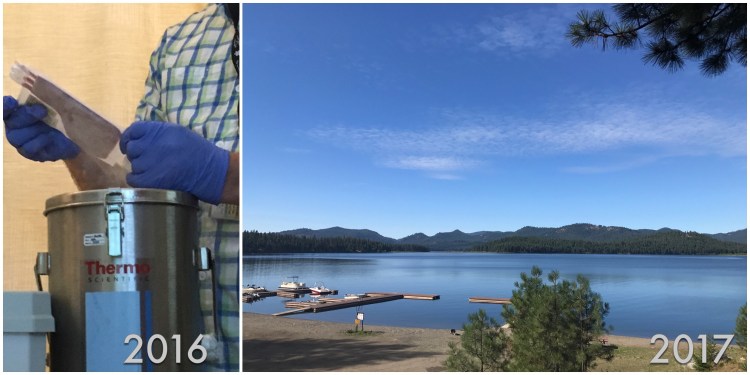
For the last 25 years or so, my family has spent the last week of July and first week of August at North Twin Lake in the far northeast corner of Washington State. In 2016, on the day we would have normally been driving to our vacation, I was receiving my stem cells. Our schedule was interrupted last year.

As this anniversary approached, I was trying to decide how I should mark it. I didn’t really come up with anything clever, but we headed to the lake again this year. As soon as we arrived, I realized that this is the perfect way to celebrate my new lease on life.

Many of my photos are of the Twin Lakes area of Washington State. My images best depict the area where my words will fail. It is a very remote and nearly undisturbed part of the country.

In the morning, the lake is glass smooth. The area is home to the common loon (actually a rare animal), and the bird’s call echoes across the water. Eagles and osprey glide above, suddenly diving to the surface to capture a fish for an early meal. Occasionally, a moose can be spotted getting a drink at the lake’s edge.

I treasure the time just after sunrise when I run the boat to my favorite corner of the lake, silence the motor, and sit. Everything is still with only the sounds of nature in the air. “Peaceful” doesn’t do justice to the feelings I have on these mornings.

During the day, the sun bathes the beach and the lake invites us to play. The water is clear and cool and ideal for swimming. The lake is large and the perfect playground for our boat, wave runner, and kayaks.

It’s berry season, and my wife takes to the hills with her family to gather wild huckleberries. If the harvest is good, huckleberry cobbler and pancakes are on the vacation menu. If it is very good, we will enjoy huckleberries throughout the year.

My wife’s family has lived in this area for many generations, and a visit here is a reconnection with those people and that special history. Our children learned to swim here, as did their mother, grandmother, great-grandmother, and ancestors past. Some of my siblings will join us here to share in the peace and the beauty, and it has become part of their lives as well.

My body is not as strong as it was pre-transplant. Fatigue will remain a regular part of my life as long as it’s necessary to take medications to keep the evil myeloma cells at bay. But none of this matters when I’m here.

I forget about the physical limitations, the changes, and the future risks.

Time slows down here. This is how I mark this special day.

Because of the work we did a year ago, as well as before and since, I can sit in my boat on the lake this early morning and listen to the loons and watch the eagles. I can swim and jet across the water. I can enjoy the company of family and friends.

I’m reminded that it is good to be alive.

────────────── ♦ ────────────────

Photo Credit: (c) 2017 Mark Pouley

I much prefer my view in 2017 to the view from my bed in 2016.

What’s in a number?

Multiple myeloma patients undergo numerous lab tests on an ongoing basis. Part of life with cancer is watching numbers creep up and down. In my case, finally seeing a zero was cause for elation.


April marked nine months since my autologous stem cell transplant and the beginning of another cycle of maintenance therapy.

Complete labs are drawn at the beginning of each treatment cycle. As usual, I received an email a few days later that included the latest lab results. I im­medi­ately scrolled to the bottom of the report to look at my M-spike. Instead of num­bers, this time I saw letters: “Too small to quantify.”

That was the first time since my diagnosis two years ago that I’ve had no measurable M-spike. My reaction to this information surprised me.

I felt elated. I felt relief. I felt accomplishment. Why? In reality, the lab result was only fractionally better than the last four months. As it turns out, my May M-spike returned to 0.1 g/dL. In fact, there was probably no real movement; my monoclonal protein level is probably just sitting on the line between quantifiable and un­quanti­fiable.

My M-spike has been tracked since my diagnosis, and it is a key to quantifying the success of my treatments.

In November 2015, when we decided to start treatment, my M-spike was 4.9 g/dL (49 g/L). Eight months later, before my transplant, my M-spike was 0.6 g/dL. By all accounts, this was a good response to the initial treat­ment, and a good starting point for the transplant. Ninety days post transplant, my M-spike was 0.3 g/dL. Following maintenance therapy, the M-spike crept a bit lower and hovered at 0.1 g/dL.

I’ve mentioned many times that I luckily avoided any symptoms of illness since my diagnosis. The only real sign I had multiple myeloma was in my test results. Is it possible to read such results dispassionately? Per­haps I give too much power to them.

The excitement I felt seeing the “too small to quantify” result was replaced by mild worry four days later when I woke up with a 103.3 degree Fahrenheit (39.6 C) fever. The fever lasted nearly a week, hovering between 101 and 102 F (38.3 and 38.9 C). An irritating cough developed two days after the fever. That prompted a trip to the clinic for blood tests, cultures, and chest x-rays. All the tests were normal, and six days later, the fever was gone for good, slowly followed by the disappearance of the cough.

It’s likely this brief illness was a result of my immune system still recovering from the stem cell transplant. Still, despite the con­tinuously good lab results, I spent a week home from work, sleeping and nursing a fever. Blood was drawn and tests were studied to be sure I hadn’t contracted a virus or infection that could portend a serious illness. Regardless of the good M-spike, I will always be living a cautious life.

This is the reality of multiple myeloma. This is the reality of a disease that is incurable and odds say will re­turn at some indefinite future date. Unlike some cancers or ailments that can be removed from the body and one’s life, multiple myeloma will re­main within me and be my companion forever.

Of course my lab results are important, and I will savor the good numbers as long as they remain. My hope is this will be a very, very long time. I will also count my blessings that my side effects remain minimally intrusive and my occasional fever or cough is mild by comparison to some of my fellow patients’ experiences.

The important lesson I’ve taken from the ups and downs of the last month is that there will be these ups and downs. I can’t invest too much emotional energy in my lab results or even in the occasional fever or cough. I’ve already decided not to project too far ahead or waste my time worrying about what might happen in the future. There simply is no point to this. I’m learning, though, that this mindset has relevance on a daily basis as well.

Was my multiple myeloma more or less serious when the lab results moved between 0.3 g/dL and “too small to quantify?” Did it change how I was feeling or what treatment choices I’d make? The answer to both ques­tions is “no.” The test results have a greater psychological impact than medical importance at this point. Certainly the tests are important, and someday there may be a meaningful change in the results. Until then, I need to keep them in perspective.

I haven’t fully adopted this new mindset. I pour over my weekly and monthly lab results trying to glean insight into my condition. My challenge is to process this information, highs and lows, without attaching too much unnecessary emotion.

Instead, I will celebrate the many days that I am well. The days I get to be with my loved ones. The days I get to do the things I enjoy. The days I can continue to work and accomplish valuable tasks. Having these days and embracing them will be my true measure of how well I’m fighting this cursed disease.

────────────── ♦ ────────────────

Photo Credit: (c) 2013 Mark Pouley

A hot day in Seattle is reason to celebrate, and these children join the generations before them that have basked in the cool waters of the International Fountain. One little girl today has found her own “pot o’ gold” at the end of the rainbow away from where the crowd naturally gathers.

Making Room to Grow

We decided to sell our home of 26 years. That means sifting through years of memories and boxes of stuff. It means discarding the old to make room for the new. I see a lot of similarities in this move and my preparing for life with an incurable cancer.


Apparently I’m not content to let life settle into a routine. Even though I’ve entered a very happy holding pattern with my disease and maintenance therapy, I’ve learned life is never that simple.

We’ve decided to sell our family home of 26 years and move. The move will be short in distance (only a few miles north), but far in change of life. The process has consumed a great deal of my time, energy, and attention.

We raised four wonderful children, now all adults, and welcomed our first grand­children to this home. We host nearly 30 family members here every Thanksgiving, a cherished tradition for everyone. A lifetime of happy memories was created within these walls and the hidden corners of the woods surrounding the home. The time has come, however, to move on.

Of course, moving means packing and sorting through years of trinkets, toys, children’s art projects, and photos. We’ve been so busy, I haven’t had much time to be sentimental. However, memories are thick. As I come across a special item, I smile, remember, and place it in the coveted position of being preserved and carried forward to our new home. Only a few special items get saved.

Not everything is a valued treasure. I can’t count the number of trips we’ve made to donate items to the local thrift store, or to the dump to simply dispose of junk.

What things go?

Souvenirs and memorabilia that were gathered, but hold no value today. Gifts received and gifts never given, that were never used or shared. The broken and bulky things that should have been thrown out the day they were put aside when we promised to “get to it one day.” The parts and pieces of things I thought I would need in the future, but now I can’t even identify. The old and used items that were replaced, but were saved in case they might be useful for someone some day. All of it, shoved in the back of a closet, placed high on a shelf, or in the attic; out of sight and out of mind, until we were forced to confront and deal with it.

The move to the new house is exciting. It will be a new adventure. We are already picking out colors for carpets and walls. We are thinking about minor remodels and improvements we can do right away to make the home ours. We are imagining ourselves in our new home, with our family and friends, entertaining again this coming Thanksgiving. This home provides us opportunities our old home didn’t, new views, and a fresh perspective.

I’m sure there is a metaphor lurking here.

My diagnosis two years ago made me reevaluate so much of my future life. What I thought might happen over the next twenty or more of my “golden years” shifted dramatically. Not that I’ve decided those years are lost, but I don’t want to sit idly today expecting those years to come. What I do today, how I live right now, has become increasingly important, and I want to be sure I’m doing the things that will make me and my family happy.

For instance, I assessed some of my work projects and dropped commitments I’d had for several years. I realized the time I was spending on the projects just wasn’t worth it to me. My continued effort on the projects was not necessary to the projects’ success and wasn’t something I enjoyed doing. Over the last two years, I’ve evaluated the projects I’m working on, or I was asked to contribute to, with a more critical eye.

Today, I savor every moment I spend with my grandkids. They make me smile. They make me happy. Very simple things, like watching them play with a toy by themselves, or using their imagination, warm my heart. I share in their wonder when they witness the simplest things for the first time. My four adult children all live within an hour, and I see them frequently. We all just shared another holiday meal together. The time I spend with family is the most precious gift I have.

I’m also looking at relationships with people past and present. I want to stay close to people who are im­por­tant to me, who know me and support me. While I don’t need to pare down my list of friends, it’s im­por­tant to spend time with the special people in my life and perhaps avoid confrontations with others who are less than fulfilling.

Multiple myeloma has focused my vision to see the clutter of my world. I can identify things I’ve just let hang around me that take my time and energy but bring me little joy. By sorting through and ending my attachment to the projects and commitments that are less important, I can devote more time to the more meaningful and joyful parts of my life.

Living with maintenance treatments is new and challenging. While I could choose to focus on the possible dangers of the toxicity of the drugs or the relapse of my disease, I choose to understand how my body reacts to a treatment cycle, adjust to that, and move forward.

I have a disease that needs to be treated and may ultimately shorten my time here. But it also gave me the opportunity to clean out my life, discard things I’ve been carrying with me for no good reason, and bring the people I love closer to me. A focused future is exciting, making every day more meaningful.

Perhaps most important, my life has never been “settled” or routine. There is no reason to begin now. Every day is an adventure and an opportunity.

pastedGraphic_2.pdf

Photo Credit: (c) 2014 Mark Pouley

The orchards are blooming again in Washington State. To keep the trees healthy and productive, farmers must constantly prune the trees back, removing old limbs. As the blooms turn to fruit, workers thin the fruit, removing some fruit from the tree so the remainder has more room to grow.

Two Years and Many New Beginnings

Taking a look back at everything that has happened, the ups and the downs, in the two years since I was diagnosed with multiple myeloma.


It’s been two years since my multiple myeloma diagnosis and the begin­ning of this journey. So much has happened since then.

When you watch events day-to-day, it’s easy to miss their significance – even in the case of big events. Given more perspective, however, the chal­lenges and changes become more clear, and I now recognize the many new begin­nings I’ve encountered in my myeloma life.

I’ve already written about the challenging months fol­low­ing my initial diagnosis, when I faced debilitating fear and anxiety. I don’t know if time will ever make those feelings fade completely, but I’ve moved well beyond the weight I felt with the news. I can’t identify a specific turning point when the haze of the diagnosis was lifted, because it primarily came with time and education.

While the fear subsided gradually, starting treatment in November 2015 was an event – a new beginning – that dramatically altered the journey for me. I was finally “doing something” about the threat I faced. I was empowered to wrest control of my life away from the cancer that seemed to take control a few months early.

Even though that initial treatment was not as successful as we all wished, I didn’t feel fear as much as I felt encouraged to explore my options. I innately knew we would find a successful treatment. This was the end of my days as a passive and fearful patient just waiting on the unknown. I truly felt like I was actively attacking the cancer.

My stem cell birthday on July 22, 2016 was another new beginning for me. A big one.

Up to that point, I never really felt I was sick, even while I was going through my induction therapies. That is one of the odd things about multiple myeloma for me; I’ve never felt ill in any way from the disease. I’ve also only experienced mild side effects from the treatments. If anything, the diagnosis created a “mental health” challenge for me coming to grips with what was happening.

The transplant moved me to a new place. The daily blood draws and clinic visits, intended to immediately alert us to the first signs of infection or other ailments, made me feel vulnerable. Reporting to nurses and doctors everything that went into my body, and what came out, was sometimes embarrassing. The loss of appetite, constant fatigue, and drastic restrictions on my life made me feel disabled. While I was extremely lucky to avoid severe side effects during this time, and I responded well to the treatment, my transplant moved me to a new category of patient and it all became very real for me.

As I recovered, I decided I wanted to be more involved with the multiple myeloma community. Following my transplant, and the fulfillment I experienced documenting my treatment in The Beacon forum, I decided to try my hand at writing a column. I have a story to share, I enjoy writing, and I wanted to give back to the com­munity that helped me survive. The experience of writing has encouraged me to get involved in other ways.  This new beginning has moved me beyond a personal journey with myeloma to addressing a com­munity cause. I will always be a patient, but for now I feel I’ve left the restraints of the clinic.

At this point in my journey, I’ll be receiving maintenance treatments indefinitely. My labs are generally normal, and the multiple myeloma is well at bay. Unlike the earlier treatments that aimed to kill off as much of the can­cer as possible, maintenance is intended to preserve the status quo. This is a bit odd, in that I will under­go a lot to simply see no change in my health. But I recognize it signals my newest beginning – the start of what I hope will be a very long stretch of my life with myeloma.

My family has been season-ticket holders for the Seattle Sounders FC soccer team since its inaugural game in 2009. Going to the Sounders’ matches from March to October every year is a major family activity. As season-ticket holders, we’ve enjoyed the same seats every season, and we’ve grown very close to several people who sit around us.

Unfortunately, the restrictions of my stem cell transplant robbed this activity from us last year. The last live match I attended pre-transplant was in July. I was unable to attend the remainder of the season, which the team capped by capturing the league championship. I watched all the matches on television, but I really missed being part of the crowd. Last month, the Sounders opened their 2017 home stand, and I returned to my seat. After the match, my wife and I both experienced an unexpected feeling of accomplishment.

Looking back two years, I’ve never really felt my life was threatened. Each day was unique, and we just did what we needed to get to the next. We attended the appointments and meetings that were scheduled. We sat patiently for the blood draws and treatment infusions. We cleaned the house, prepared our meals, and followed the instructions to help me avoid getting ill.

While we understood that multiple myeloma was a killer, I don’t think we ever really felt threatened. But on the day we returned to our familiar stadium seats and cheered our favorite team, I think we realized what we had done. The malignant cells in my body are nearly immeasurable. I avoided serious complications. I’m generally very healthy and active. Our lives are returning to a new normal, and that includes returning to important and meaningful experiences we had lost for a time.

Two years ago, everything about multiple myeloma was a frightening mystery. Since the day of my diagnosis, I’ve stepped through changes and challenges.

Today I truly feel I’ve started anew. I’m ready to go wherever this road takes me next.

────────────── ♦ ────────────────

Photo Credit: (c) 2014 Mark Pouley

April brings us the annual Skagit Valley Tulip Festival and our yearly reminder of spring and nature’s new beginnings. Hundreds of thousands of visitors to the valley arrive to take in the beauty of the flowers. The spectacle also offers endless opportunities for photographers. This image is a favorite I call “Early Bloom” because it was early in the season and these buds are just preparing to open to their full glory.